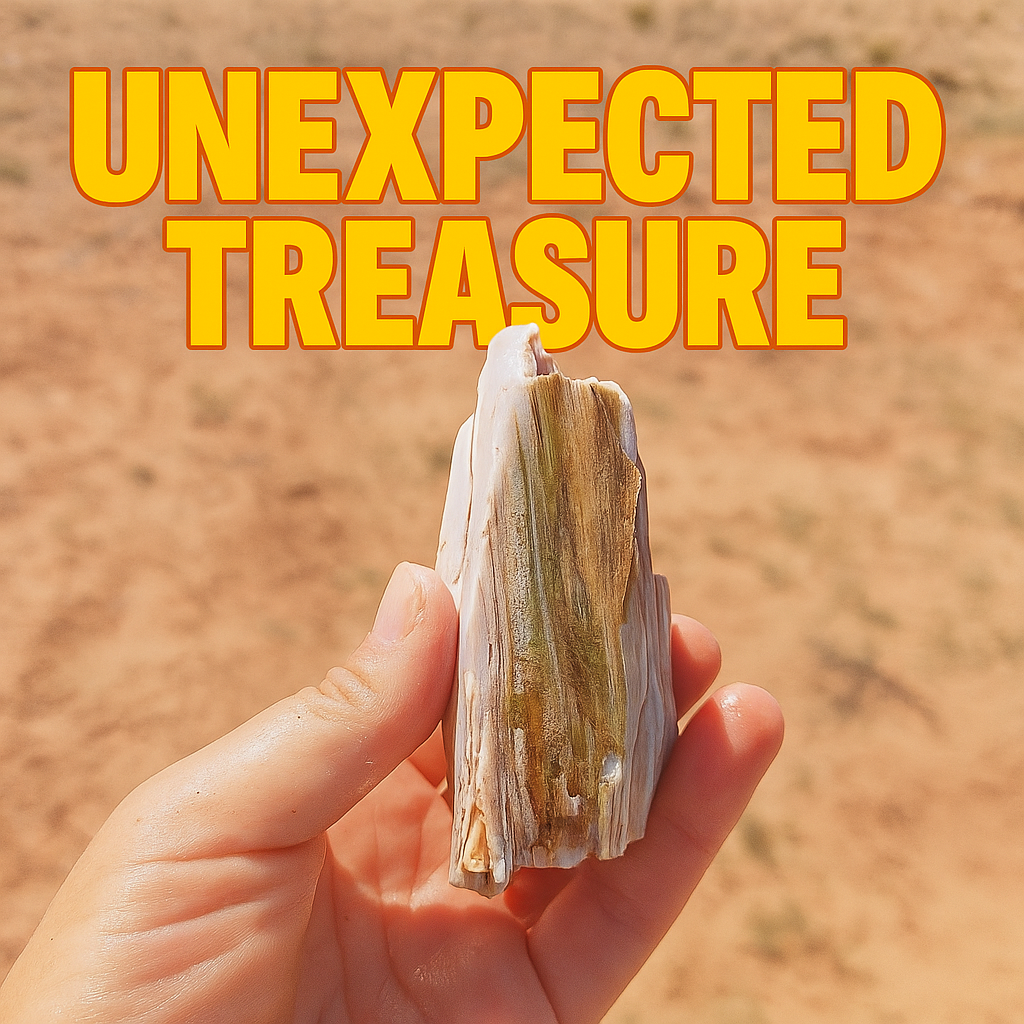
The sun hadn't even reached its full fury when I realized I was holding time itself.
What started as another agate hunt on Yellow Cat Road had just transformed into something extraordinary—a piece of ancient wood that had somehow, impossibly, turned itself into living stone. The bark patterns were still there, etched in opal like fingerprints from a world that existed before humans ever dreamed of walking upright.
This is the magic of opalized wood. This is why I chase horizons.
🌳 The Alchemy of Ages: When Forest Meets Fire
Understanding opalized wood begins with understanding impossible transformation.
Picture this: millions of years ago, volcanic ash buried entire forests across what we now call Utah. But instead of simple decay, something miraculous happened. Silica-rich groundwater seeped through the buried timber, molecule by molecule replacing organic matter with opal. The wood didn't just fossilize—it gemified.
The result? Ancient trees preserved not in stone, but in translucent fire. Bark textures that catch light like frozen waterfalls. Growth rings that shimmer with colors the original tree never knew it possessed. It's evolution's jewelry box, hidden in plain sight.
What sets opalized wood apart from regular opal isn't just the organic origin—it's the storytelling. Every piece carries dual identity: fossil and gemstone, past and present, earth and sky all crystallized into something you can hold in your palm.
👁️ Reading the Desert's Secret Language
The shift from seeing scattered opal to recognizing opalized wood happens in your eyes, not your hands.
Bark Impressions That Whisper Stories
Look for grooves, ridges, and textures that feel too organized for random mineral formation. These aren't accidents—they're memories preserved in stone. The desert doesn't lie about what came before.
Vitreous Luster That Catches Dreams
When sunlight hits genuine opalized wood at the right angle, it doesn't just reflect—it performs. That glassy sheen transforms ordinary specimens into something that makes your breath catch.
Color Play Hidden in Plain Sight
Yellow Cat Road's opalized wood might not flash like Australian fire opal, but watch for subtle green whispers and creamy white conversations happening beneath the surface. Beauty doesn't always shout—sometimes it murmurs.
Context Clues From Earth's Archive
Once your eyes learn the language, you'll start noticing pieces that seem almost deliberately placed. Half-buried in soil, positioned like the desert is offering gifts to those patient enough to recognize them.
That day, my best discovery showed green shimmer across ancient bark—barely visible except for one tiny corner begging for attention. Unearthing it felt like an archaeological dream come true, like finding something that had been waiting specifically for me.
🛡️ Field Lessons: What I Should Have Done (But Didn't)
Here's where I get real about my rookie mistakes.
Opalized wood demands respect from the moment you find it, and I... well, I treated it like any other rock. Big mistake. The combination of desert heat and inherent fragility means these specimens needed immediate protection that I completely failed to provide.
The Soft Wrapping I Skipped
Every piece should have gotten its own cloth or paper protection before hitting my collection bag. Instead, I tossed them in with everything else like they were chunks of granite. Lesson learned the hard way when I got home to find damaged edges and stress fractures.
The Separation Strategy I Ignored
Smart rockhounds keep opalized wood completely isolated from harder materials like agate and jasper. Me? I let them rattle around together during the bumpy ride back. Not my brightest moment—the gentle contact I thought was harmless caused irreversible damage to delicate surface features.
The Heat Management I Forgot
Those specimens should have been shaded and cooled immediately after collection. Instead, they baked in direct sunlight in my truck while I kept hunting. The same desert conditions that preserved them underground can cause surface crazing when they're suddenly exposed—and I learned this truth firsthand.
Looking back, these weren't advanced conservation techniques I missed—they were basic specimen survival, and I ignored every single protocol. Sometimes the best lessons come from spectacular failures.
✨ Honoring Natural Beauty: The Art of Minimal Intervention
Most Utah opalized wood achieves its highest beauty exactly as found.
Gentle Cleaning Fundamentals
Cool water and soft brushes remove desert grit without disturbing natural patina. Patience beats pressure every time—rushing the cleaning process destroys subtle surface features that took millennia to develop.
Chemical Caution
Harsh cleaners can permanently alter opal's delicate structure. When in doubt, stick with water. The desert's own weathering often provides the perfect finish.
Test-Corner Philosophy
If polishing tempts you, start with tiny, hidden areas. Learn how your specific specimen responds before committing to larger surfaces. Irreversible mistakes teach expensive lessons.
Remember: many collectors prize the authentic desert patina that comes only from centuries of wind, sand, and sun. Sometimes "untouched" tells a better story than "perfected."
🚗 Yellow Cat Road: Portal to Prehistoric Wonders
The road itself tells stories worth hearing.
Stretching through landscape that uranium miners once called home, Yellow Cat Road carries travelers through geological time zones. High clearance vehicles unlock deeper exploration opportunities, but determined rockhounds with careful driving can access significant collecting areas.
That sweltering afternoon when I thought I'd moved beyond the productive zone, the desert had other plans. Just when frustration peaked, another specimen revealed itself—proof that opalized wood chooses its own timing for discovery.
The heat was merciless. My water was running low. Logic suggested retreat. But something about the landscape insisted I keep searching. That persistence rewarded me with specimens that still make my heart race months later.
This wasn't gem-grade opal, and that never mattered. Holding fossilized bark patterns, tracing growth rings preserved in translucent stone, connecting with forests that predated human civilization—these experiences transcend mineral grades.
🌟 The Deeper Discovery
Opalized wood represents something beyond ordinary rockhounding.
Each specimen bridges three worlds: the botanical past of living forests, the geological present of mineral transformation, and the eternal future of preserved beauty. When you hold opalized wood, you're not just collecting stones—you're curating time itself.
This fusion of fossil and gemstone, organic history and mineral artistry, creates something that satisfies both the scientist and the poet living inside every serious rockhound. It's discovery that feeds the soul.
🏜️ The Invitation Continues
Yellow Cat Road taught me that the most profound discoveries disguise themselves as ordinary moments.
What began as a simple agate hunt transformed into an encounter with deep time, with transformation so complete it seems mythological. But there it was, real and tangible, waiting in the dust for someone curious enough to recognize magic wearing everyday clothes.
So when you venture into Utah's vast playground, remember: keep your eyes tuned for waxy luster, your heart open for unexpected beauty, your hands ready for specimens that rewrite what you thought possible.
The desert specializes in life-changing surprises. Your next impossible discovery is waiting somewhere between here and the horizon.
Adventure lives in the spaces between expectation and revelation. For more rockhounding discoveries and Utah desert adventures, visit Sheena's Adventures on YouTube—where every expedition uncovers new chapters in the earth's ancient story.